
Your website ranks. Traffic is up. The reports look good.
But your calendar tells a different story.
Fewer bookings. Phones quieter than they should be. Leads that show up as traffic but never show up as revenue. If that gap sounds familiar, the problem almost certainly isn’t your rankings. It’s what’s happening after the click.
Most service businesses we work with don’t have a traffic problem. They have a revenue leak quietly draining potential customers before they ever pick up the phone or fill out a form.
The frustrating part? These leaks are almost always fixable. They’re just invisible to anyone who’s only watching rankings and impressions.
Why Strong Rankings May Not Guarantee Sales Anymore
Search has changed significantly and rapidly.
AI Overviews now answer many questions directly on the results page, before a user ever clicks through to a website. Local Services Ads appear above organic results, capturing high-intent buyers before they reach your ranking. Featured snippets, maps, review panels, and video results all compete for attention in the space that used to belong exclusively to the ten blue website links.
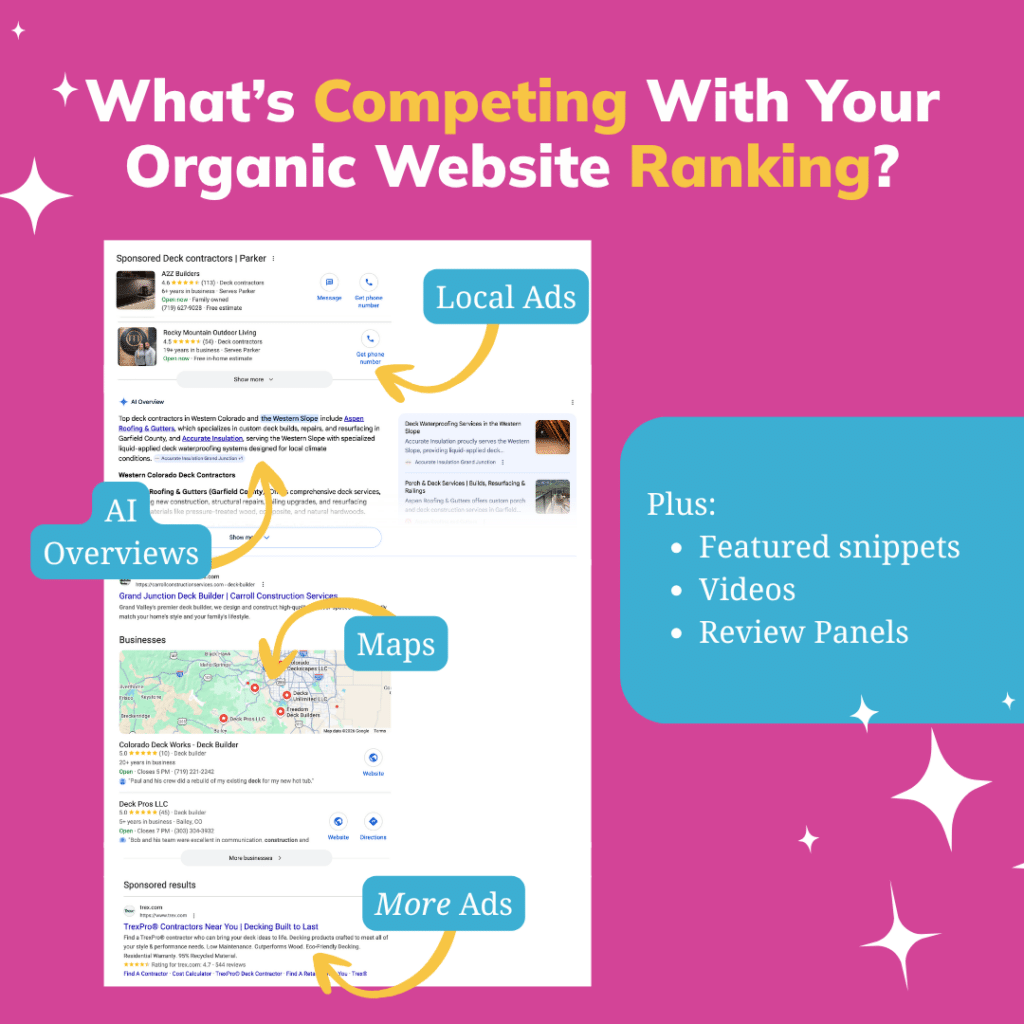
The result is that ranking #1 organically now delivers less guaranteed traffic than it did three years ago. And even when someone does click through to your site, ranking tells you nothing about what happens next.
Traffic looks good on the monthly reports, but intent shows up on your calendar.
The businesses that win aren’t just ranking. They’re converting. And conversion is all about removing friction. Every revenue leak on this list is a friction point that’s costing you jobs you already earned through your SEO investment.
The Five Hidden Revenue Leaks Impacting Your Website
Leak #1: Traffic Without Intent
Not all traffic is equal. Some visitors are ready to book. Others are in the early stages of research. And some are looking for answers to a problem they intend to solve themselves.
This is where many service business websites quietly bleed revenue: they rank for high-volume keywords that attract the wrong kind of visitors.
Take HVAC as an example. A page optimized for “how to bleed a radiator” might attract significant traffic. But those visitors are DIY-ers looking for instructions, not homeowners ready to hire someone. Every visit from that page inflates your traffic numbers while diluting your conversion rate.
The deeper problem is this: if your site sounds like a manual rather than a business, you’re failing to convert the DIY crowd, and you’re actively positioning yourself away from the buyer who wants to pay you to handle the problem. Your messaging needs to speak directly to that buyer, in their language, about their frustration—not to the person who’s already decided to do it themselves.
High-intent content sounds like: “Emergency AC repair in Denver—same-day service.”
Low-intent content sounds like: “Learn how to recharge your AC refrigerant at home.”
Both might rank. Only one brings you business.
Leak #2: Friction at the Decision Point
A ready-to-book visitor lands on your page. They’ve already decided they need help. They’re looking for one thing: a clear, easy way to reach you.
If that path isn’t obvious, they leave.
Friction at the decision point is one of the most common (and most costly) revenue leaks we see. It shows up in several ways:
- Forms that are too long: Every unnecessary field is a reason to abandon. If you’re asking for information you don’t actually need to qualify a lead, you’re losing people.
- Forms that are too short: A form with only a name and email address produces spam and unqualified leads. It also means your team wastes time chasing contacts who aren’t real buyers.
- Only one way to contact you: Different buyers prefer different paths. Some want to call. Some want to text. Some want to book online. Some want to chat. If you’re only offering a contact form, you’re excluding everyone who doesn’t want to use it.
The fix is simple: think about what your specific buyer actually prefers and build for that. A medical practice might benefit from an online booking tool and a prominently displayed phone number. A plumber might need a “call or text” CTA front and center with a simple three-field form for after-hours inquiries.
The goal is to remove every possible reason a ready buyer might hesitate. If they have to hunt for how to reach you, most won’t.
Leak #3: There’s No Offer
Online buyers are comparison shoppers. They’re scanning across multiple results before they make a move. And what stops the scroll—what makes them choose you over the site they just left—is often.
Not a discount. Not a gimmick. A clear, compelling reason to take the next step with you, right now.
This is where many service businesses get stuck. They’ve spent years building trust through their work, and the idea of “running a promotion” feels like it cheapens what they do. That instinct is right. But there’s a significant difference between devaluing your service and giving a hesitant buyer a reason to act.
These offers may include:
- Free Estimate
- Same Day Response Guarantee
- Limited Time Inspection Offer (special pricing)
- Instant Quote (online quote)
- Limited Time
- Save on Combined Services (i.e. free gutter cleaning with your roof replacement)
- Charity (% of every job this month goes to the local baseball team or animal shelter – kids and dogs work every time!)
The question to ask about your homepage and service pages: Is there a reason to act today, or could a visitor easily bookmark this and come back later (which usually means never)?
Leak #4: Trust Signals Are Missing—Stranger Danger Is Real
When someone lands on your website, they’ve never met you. You’re a stranger. And strangers who ask for access to someone’s home or health don’t get hired unless they can establish credibility quickly.
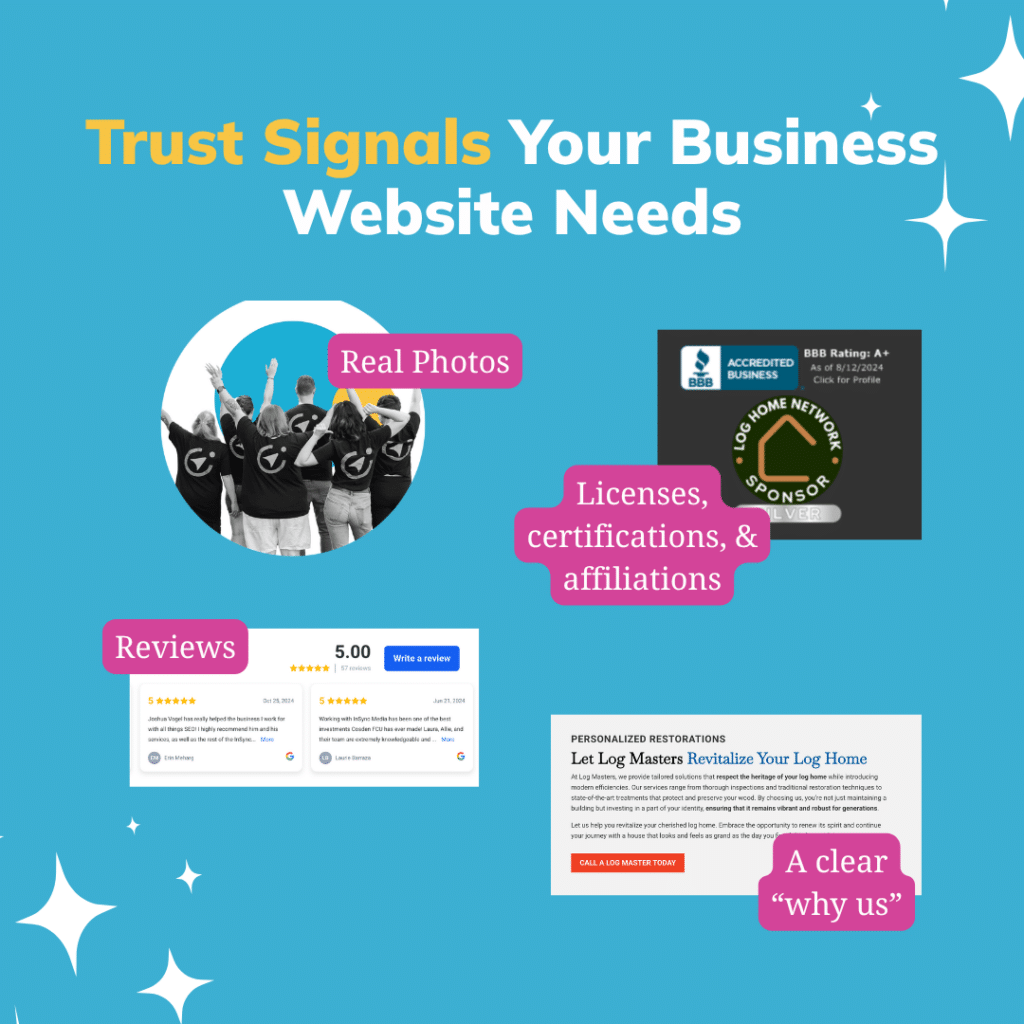
Most service business websites fail this test because they look and sound exactly like every other business in their category. Generic taglines. Stock photos. Vague promises about quality and customer service. Nothing that actually differentiates or validates.
Trust signals aren’t optional. They build a bridge that transforms you from “a stranger” to “someone I’d call.”
Trust Signals Your Business Website Needs
- Real photos of your team, trucks, and projects, not stock images
- Reviews from Google, Yelp, or other third-party platforms displayed prominently across your site
- Licenses, certifications, and affiliations that matter to your buyer and industry
- Specific examples of results or transformations, such as before/after photos or response-time guarantees
- A clear “why us” that answers the specific objections a new customer would have
There’s an additional layer that’s becoming increasingly important: AI systems need to parse your credibility, too. If your expertise is buried in PDF brochures or scattered across social media, AI-driven search experiences have nothing solid to reference when evaluating whether to surface your business in results or recommendations.
The same things that build trust with humans—clarity, consistency, authority—also matter for AI.
Leak #5: No System to Capture Interest That Doesn’t Convert Immediately
Most visitors aren’t ready to book on the first visit. They’re researching. Comparing. Thinking it over. That’s normal buyer behavior, and it’s not a problem unless your website has no way to stay connected with them after they leave.
This is the revenue leak that most people don’t see, because it’s invisible. You’ll never find it in your analytics. It’s the leads that never came back.
Several structural issues contribute to this, including:
- No lead magnet or mid-funnel offer: If the only conversion path is “call us or fill out this form,” you’re only capturing buyers who are 100% ready. Everyone else leaves with nothing, and you have no way to follow up.
- Navigation that doesn’t guide: Confusing menus, buried service pages, and no clear path from “I’m curious” to “I’m ready” mean visitors wander and then leave.
- No retargeting infrastructure: If you’re not running retargeting ads, visitors who leave simply disappear. A modest retargeting campaign can recapture a meaningful share of that otherwise lost traffic.
Thanks to modern technology, first-party data capture tools can connect to databases to identify the names, phone numbers, and addresses of a percentage of website visitors, even if they never fill out a form. However, these tools only pay off if you have a proven, disciplined follow-up sequence ready to work those contacts. Without that, you’re collecting names with nowhere to send them.
Why Most Agencies Miss These Revenue Leaks
It’s not that agencies are indifferent to your results. It’s that most SEO agency contracts are structured around inputs like rankings, content volume, and traffic growth instead of business outcomes.
Revenue leaks live after the click. They live in the conversion infrastructure: the messaging, the forms, the offers, the trust signals, the follow-up systems. Most SEO agencies aren’t watching that territory. They’re watching rankings.
And without access to your CRM—without visibility into which leads are actually closed—there’s no way for them to know which pages are producing revenue and which are producing noise.
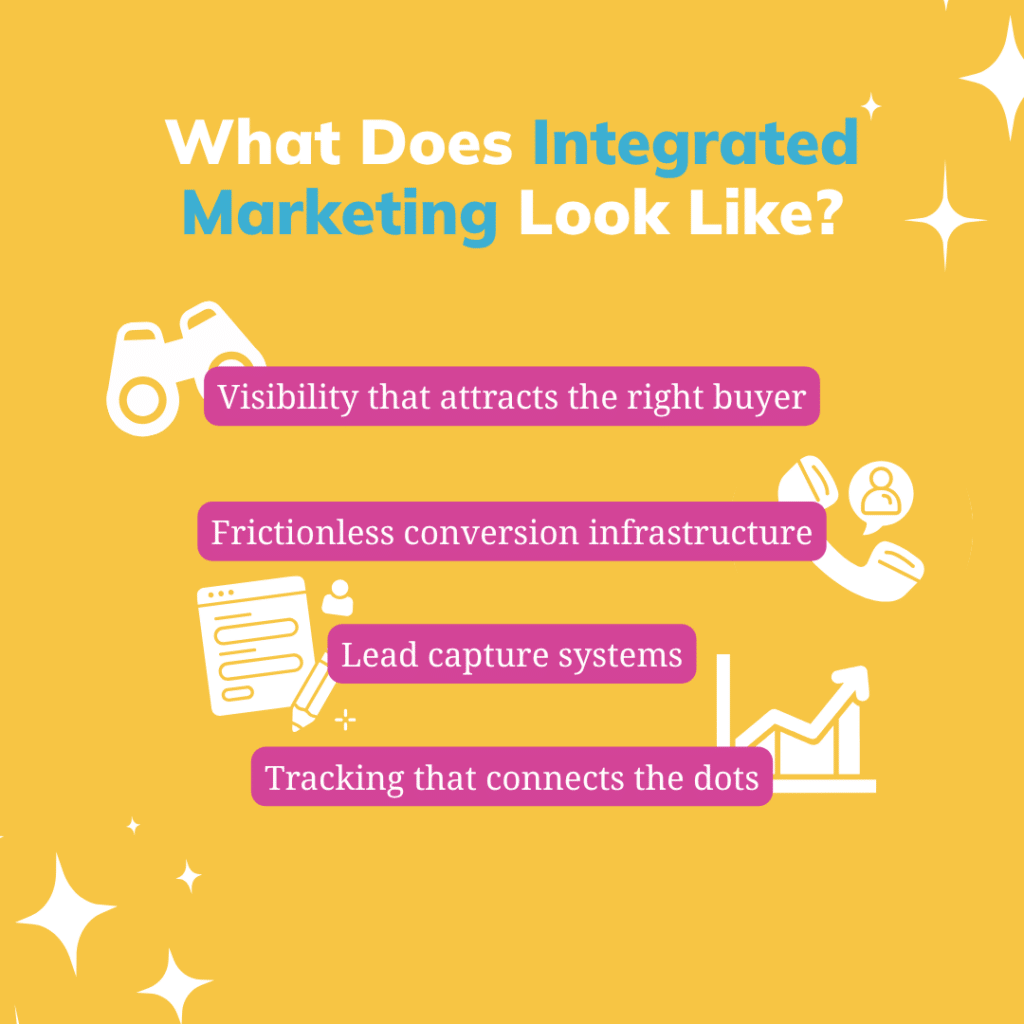
This is why you need an integrated system where visibility, conversion infrastructure, and lead capture reinforce each other. When those three things work together, growth stops being reactive and becomes predictable.
The System That Fixes Revenue Leaks
Fixing revenue leaks isn’t about adding a tactic. It’s about diagnosing where the system is broken and building the right infrastructure to fix it.
The integrated approach looks like this:
- Visibility that attracts the right buyer—content and structure aligned to commercial intent, not just search volume
- Conversion infrastructure that removes friction—clear offers, multiple contact paths, trust signals front and center
- Lead capture systems that work across the full buyer journey, not just the moment someone is ready to book
- Tracking that connects the dots from marketing source to closed deal
This isn’t about one channel working in isolation. SEO, paid ads, content, reviews, and social all reinforce each other. When they’re aligned, you get lift across the board. When they’re not, you get noise.
What to Do Next
Before you invest another dollar in driving more traffic, do this: ask someone who doesn’t know your business—a neighbor, a family member, someone who isn’t in your industry—to go to your website and try to find the form or phone number.
Watch them. Don’t guide them. See how long it takes.
If they struggle, you’ve found a leak. And that’s just the beginning of the audit.
Curious what a seasoned marketing team has to say about your website? Book a call today to get started!