You’re showing up in search. Traffic looks decent. Your SEO report shows green arrows and upward-trending lines.
And yet, somewhere across town, a competitor with worse rankings is booking more jobs.
This is one of the most disorienting situations a service business owner can face: doing the right things, seeing the right metrics, and still watching business walk out the door to someone who, by every measurable standard, shouldn’t be outperforming you.
The answer almost always lives in what happens after someone lands on your page. Your ranking got them there. Your website’s job is to close them. And if it’s not doing that job—for reasons that may be entirely invisible to you—you’re funding your competitor’s growth.
It’s time for a clear-eyed look at what they’re doing differently so you can close the gap and boost your business.
The Competitive Advantage Gap: What Their Site Does That Yours Doesn’t
Here’s the reality buyers are living every day: when they search for a service, they don’t pick the first result. They open four or five tabs and run a side-by-side comparison, usually without realizing that’s what they’re doing.
They’re scanning each site with a simple set of subconscious questions: Do I immediately understand what this company does? Do they seem trustworthy? Is it easy to contact them? Whoever answers those questions fastest and most convincingly wins the inquiry.
Your site and your competitor’s might both rank. But if their website gets leads and yours doesn’t, the gap is more about conversion infrastructure than rankings. Let’s look at exactly where that gap tends to show up.
Six Ways Your Website Is Handing Leads to Competitors
Problem #1: Your Messaging Is Generic. Theirs Is Specific.
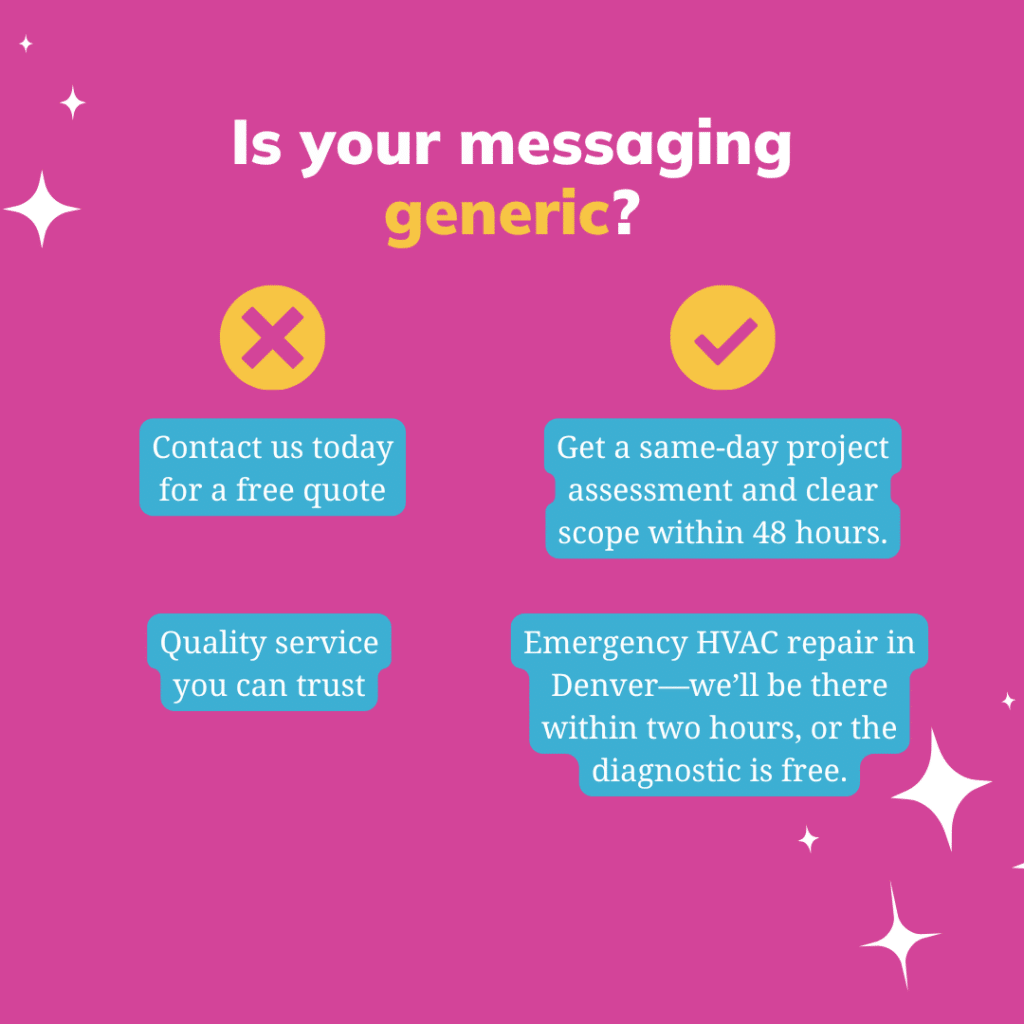
“Quality service you can trust.”
Every service business in your category says some version of that. It means nothing to a buyer comparing options, because it says nothing specific about you.
Compare that to: “Emergency HVAC repair in Grand Junction—we’ll be there within two hours, or the diagnostic is free.” That’s a message that answers the buyer’s actual question: Why you, and not anyone else?
A business can survive with unclear messaging early on, but it can’t scale that way. When buyers can’t tell you apart from five other companies, they default to whoever seems most clear and whoever makes it easiest to take the next step.
The diagnostic question: If you removed your logo and company name from your homepage, could a buyer tell your site apart from your three closest competitors? If the answer is no, your messaging isn’t doing its job.
Problem #2: You Make Them Work Too Hard to Understand What You Do
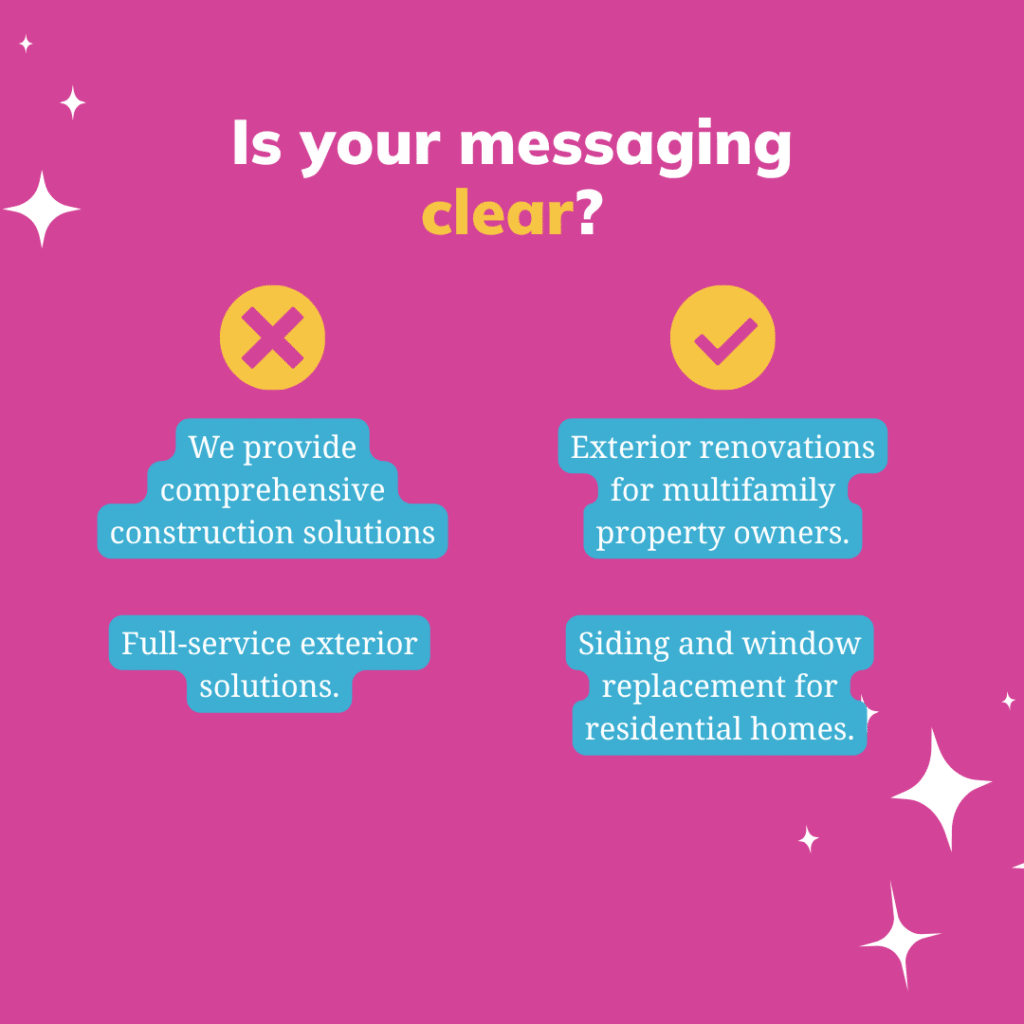
High-performing competitor sites answer the core question immediately: “We fix X for Y customers in Z area.” No guessing, no clicking around, no decoding industry jargon.
Underperforming sites require effort. They use vague service descriptions, unexplained acronyms, and coverage areas that require a separate “service area” page to understand. They make the visitor do mental work before they can even decide if this is the right company.
Confused buyers don’t buy. They bounce to the clearer option. You have roughly three seconds to answer “Is this the right place?” before that decision is made. If someone has to hunt for the answer, they’re already gone.
However, the answer isn’t just “more words.” Instead, you need to say the right thing consistently, immediately, and in language that matches exactly how your buyer describes their own problem.
Problem #3: Their Site Feels Modern. Yours Feels Stuck in 2015.
Visual credibility signals professionalism before a single word is read. Buyers make judgments about your business in fractions of a second based on how your site looks, and those judgments are hard to reverse.
An outdated design feels old. It communicates: outdated processes, outdated standards, and outdated customer experience. Even if you’re the better operator with better reviews and a better team, your site can undermine that perception.
In addition, more than 60% of searches now occur on mobile devices. If your competitor’s mobile experience is clean and yours is clunky, you’re losing the majority of your potential leads.
Check your site. Do you have:
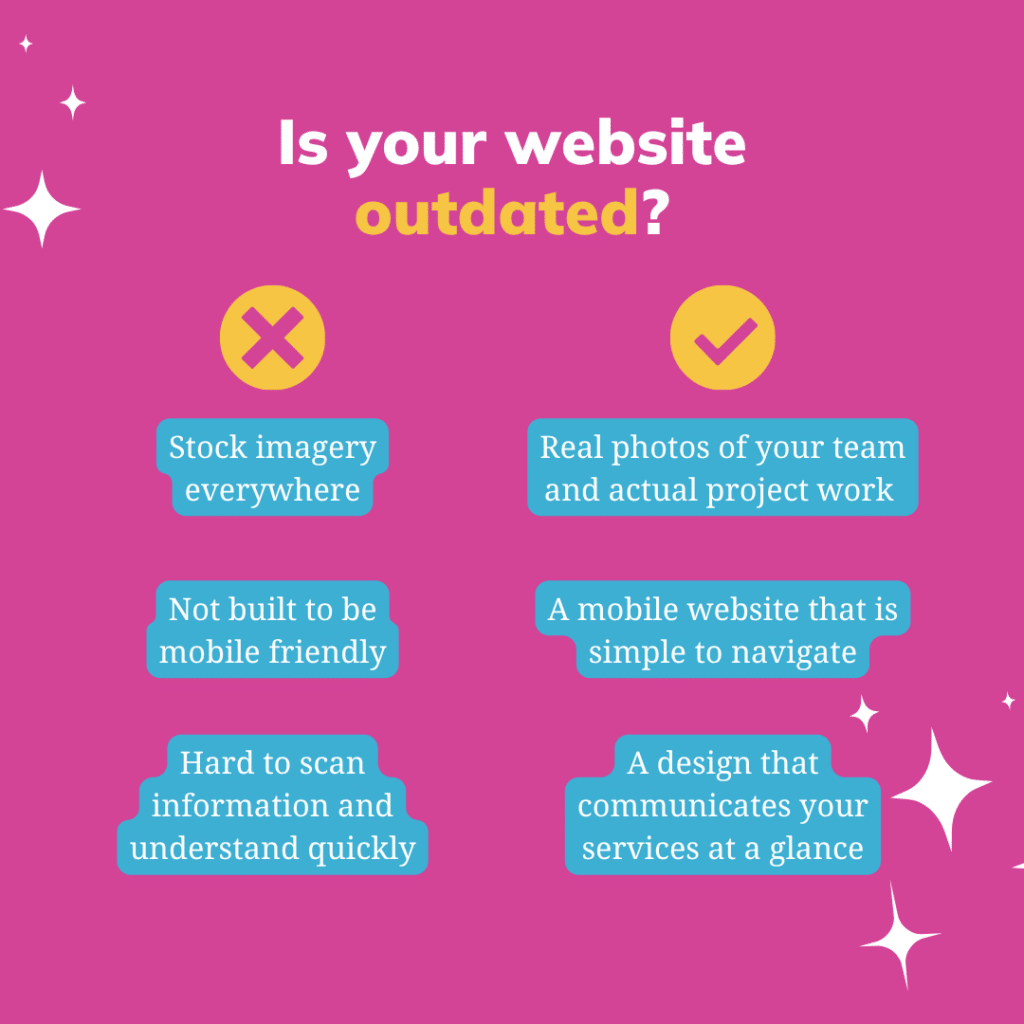
- Real photos of your team and actual project work (not stock imagery)?
- A mobile website that is simple to navigate?
- A design that communicates your services at a glance?
Problem #4: They’re Visible Everywhere. You’re Only Visible in One Place.
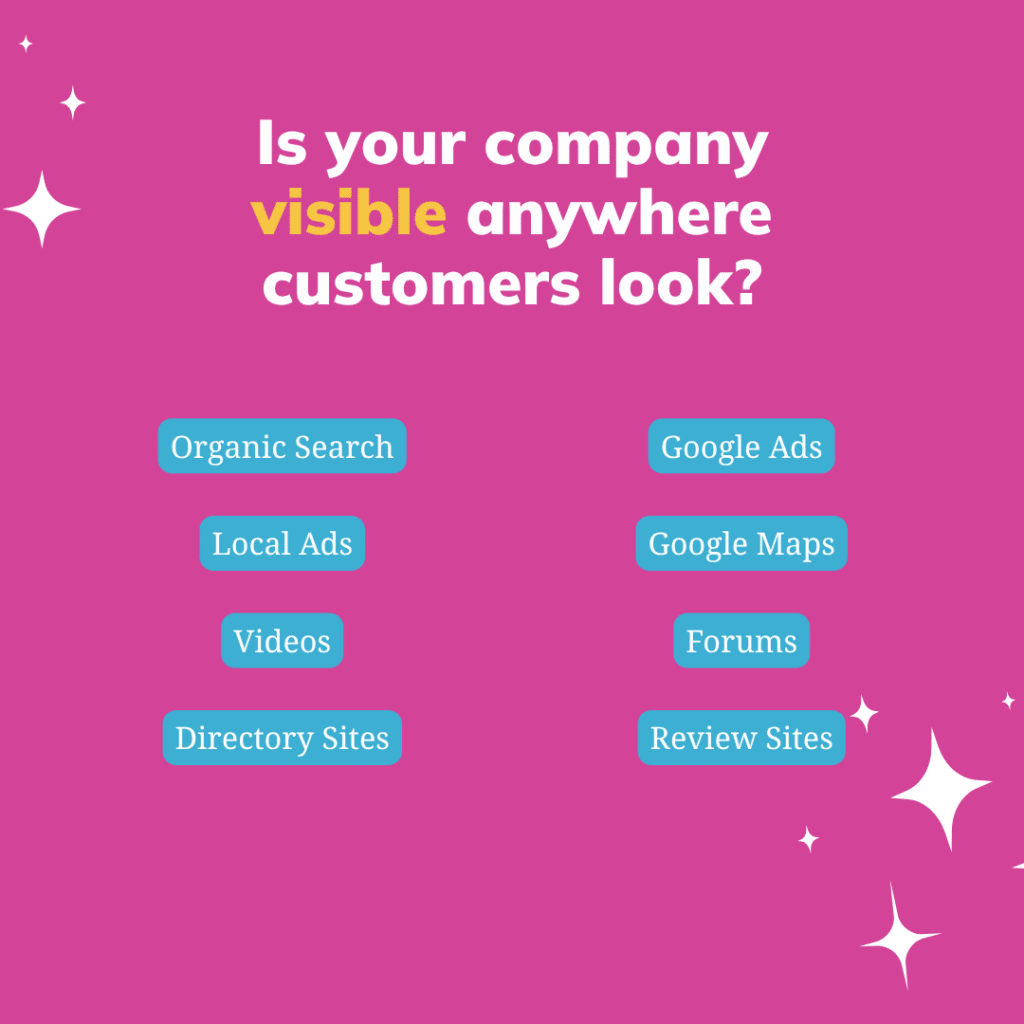
Search is no longer limited to the ten blue links on a Google results page. Google surfaces businesses across organic results, Google Ads, Local Services Ads, maps, videos, forums, directory sites, and review sites.
If your competitor is showing up in organic results, paid ads, top three in the maps, and review platforms while only your website is showing in the blue links, buyers see them five times more often than you before anyone clicks a single result.
Visibility on one surface increases trust and lift across all others. When a buyer sees your business in search, then again in the map pack, then again in a retargeting ad, they develop a sense that you’re established, credible, and everywhere. That omnipresence is a competitive asset that a single organic ranking cannot replicate.
The businesses that win are present everywhere buyers look, compare, and validate.
Problem #5: Their Trust Signals Are Front and Center. Yours Are Hidden.
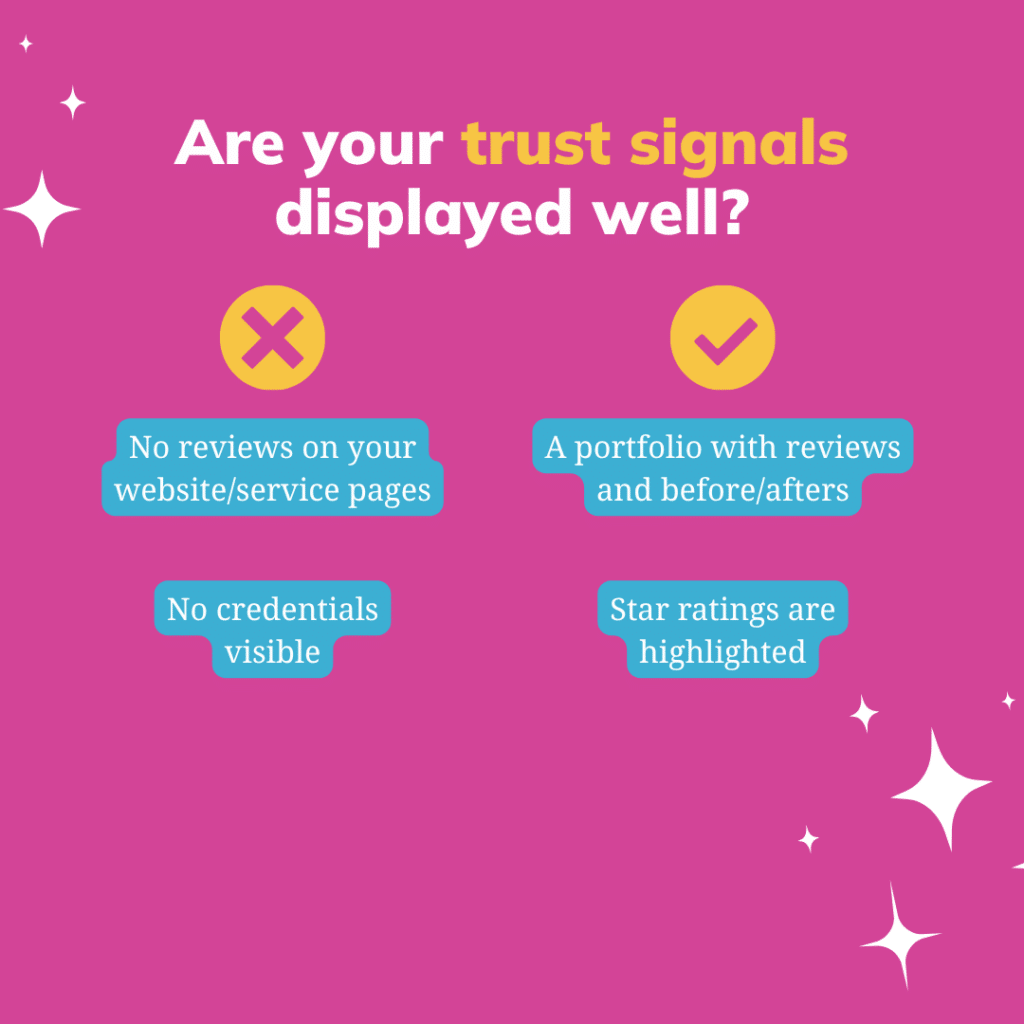
Buyers make trust decisions in seconds. If proof of your credibility isn’t visible immediately—above the fold, on every service page, where the eye lands first—most buyers operate as though it doesn’t exist.
High-performing sites prominently display their reviews, star ratings, credentials, and before-and-after work on service pages. Underperforming sites bury this information in a footer, or consolidate it onto a single testimonials page that most visitors never find.
The gap this creates is significant. If your competitor shows 4.9 stars and 200+ reviews on every service page and you show nothing, a buyer comparing the two makes a fast assumption: your credibility either doesn’t exist or isn’t worth mentioning.
There’s also a layer beyond the human buyer to consider. AI-powered search experiences scan, summarize, and surface what looks credible and consistent. If your expertise isn’t organized and visible on your site, AI has nothing solid to reference when evaluating whether to include you in results, recommendations, or overviews.
Problem #6: They Make It Easy to Take the Next Step. Your Site is Confusing.
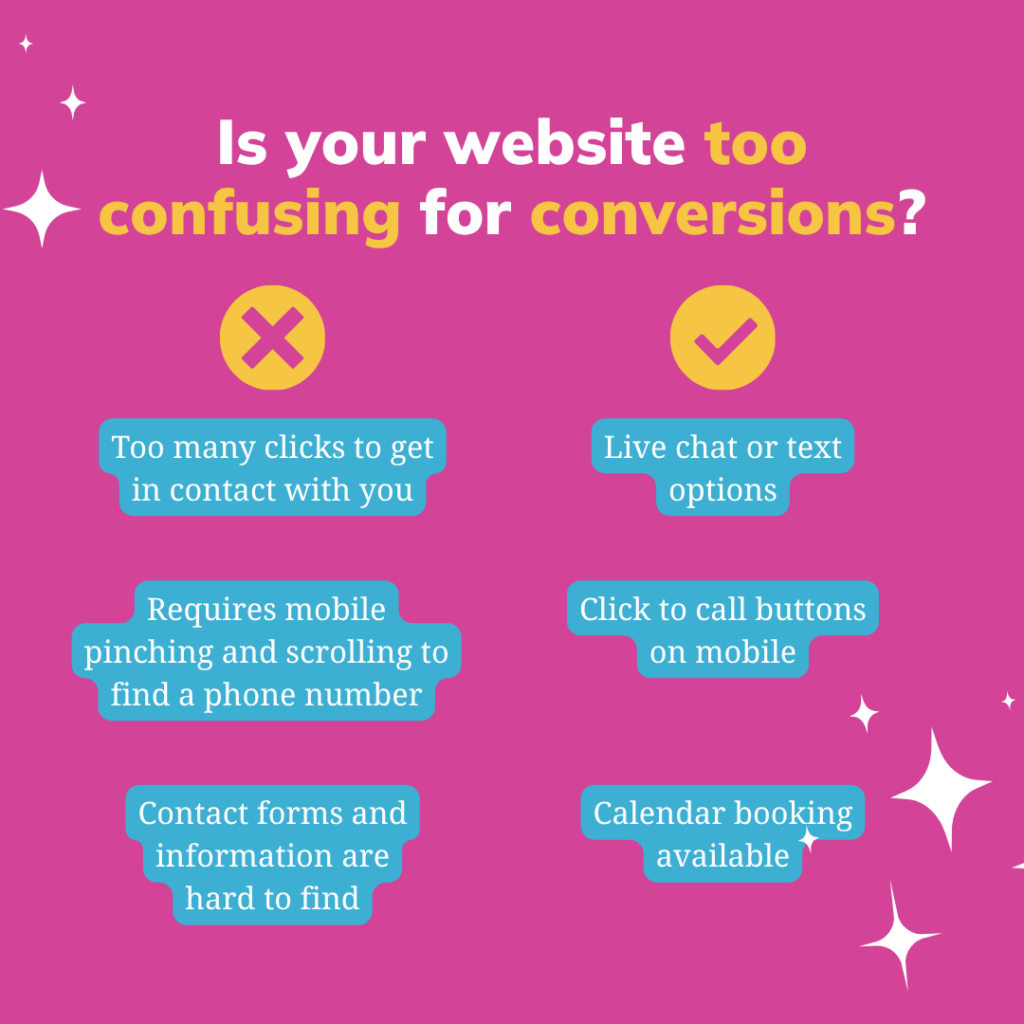
Friction kills conversions. Every additional click, every buried contact form, every page that requires mobile pinching and scrolling to find a phone number are reasons a ready buyer reconsiders.
The best-converting competitor sites make the next step obvious and effortless: click-to-call buttons that work on mobile, live chat or text options for buyers who don’t want to call, and calendar booking for those who want to schedule without talking to anyone first. The goal is to remove every possible obstacle between “I’m interested” and “I’m in.”
If your primary conversion path is a contact form buried under three menu clicks, you’re asking buyers to work for the privilege of doing business with you. Most won’t.
The Competitive Comparison Test: How Your Site Actually Stacks Up
Here’s how to spy on your competitors and see how you really stack up:
Google your primary service plus your city (e.g. Denver roofing companies, Dallas custom home builders). Open the top five results in separate tabs. Then compare them side by side across three questions:
- Which website answers “what we do and who we do it for” fastest?
- Which website shows trust signals first—reviews, credentials, real photos?
- Which website makes a conversion (phone call, live chat, instant quote, form fill) easiest on mobile?
If your site consistently loses this comparison, you’ve found your problem. And more importantly, you’ve found what to fix first.
Do the same test on your website using your phone. Try to book your own service as if you’re a first-time customer. If the experience is frustrating, that frustration is costing you leads every day.
The Three Things Competitors Are Doing That You’re Probably Not
There was a period not long ago when having a website was enough of a competitive advantage that “good enough” worked. That window has closed.
Buyers today have unlimited options and limited patience. They’re not giving your site the benefit of the doubt because you’ve been in business for fifteen years or you have great reviews on Google. They’re making fast, surface-level judgments. The site that performs best in that three-second window wins the lead.
Here’s what wins when customers are making snap decisions.
1. They’re Running Integrated Campaigns. You’re Just Doing SEO.
SEO is a critical foundation, but it only captures buyers who are actively searching when your page appears. Your competitor is running Google Ads, Local Services Ads, retargeting campaigns, and social ads, capturing buyers at every stage of the decision process, not just at the moment of active search.
Multi-channel visibility compounds trust. When someone sees your business across multiple surfaces—search, maps, paid placements, a retargeted ad after they visited your site—they experience your brand as established and credible, even if they haven’t consciously registered that you’ve shown up multiple times.
This is not about one channel working in isolation. Everything supports visibility.
2. They’re Optimizing for Mobile Conversions. You’re Just “Mobile Responsive.”
Mobile responsive and mobile optimized for conversion are not the same thing. Mobile responsive means your desktop site scales to fit a smaller screen. Mobile optimized for conversion means the experience was designed with mobile behavior in mind from the start.
High-converting mobile sites have sticky call-to-action buttons that follow the user as they scroll, click-to-call prominence so a tap on the number immediately dials, simplified forms with minimal required fields, and navigation sized for thumbs rather than mouse clicks.
If more than 60% of your traffic is mobile and your mobile experience isn’t actively optimized for conversion, you’re starting the majority of your buyer interactions at a structural disadvantage.
3. They’re Using Data to Optimize. You’re Guessing.
The most competitive operators in your category aren’t relying on intuition to improve their websites. They’re using heatmaps to see exactly where visitors click and where they stop reading. They’re A/B testing headlines and CTA copy. They have CRM tracking that connects specific pages and keywords to closed deals—not just inquiries.
Without that data, you’re making changes based on opinion rather than evidence. They’re making decisions based on actual buyer behavior. Over time, that compounding advantage is difficult to overcome without changing your approach.
What to Do Next
Start with the competitive comparison test—it’s the fastest way to see exactly where you’re losing the comparison buyers are running in real time. Open your top five competitors, run the three-question audit, and be honest about where you fall short.
Then audit your own mobile experience. Use your phone, as if you’re a stranger who just found your site. Try to identify your service area, understand what you offer, and complete a contact or booking action. Note every point of friction.
Finally, check your trust signals. Are your reviews visible above the fold on every service page, or are they buried? Do you have real photos of your team and work, or stock imagery? Is your differentiation stated clearly, or is it implied?
Still not sure how to turn your traffic into leads that close? InSync Media helps small businesses just like yours close deals and create marketing streams that work together to help you achieve your business objectives. Book a call and let us evaluate your existing strategies.